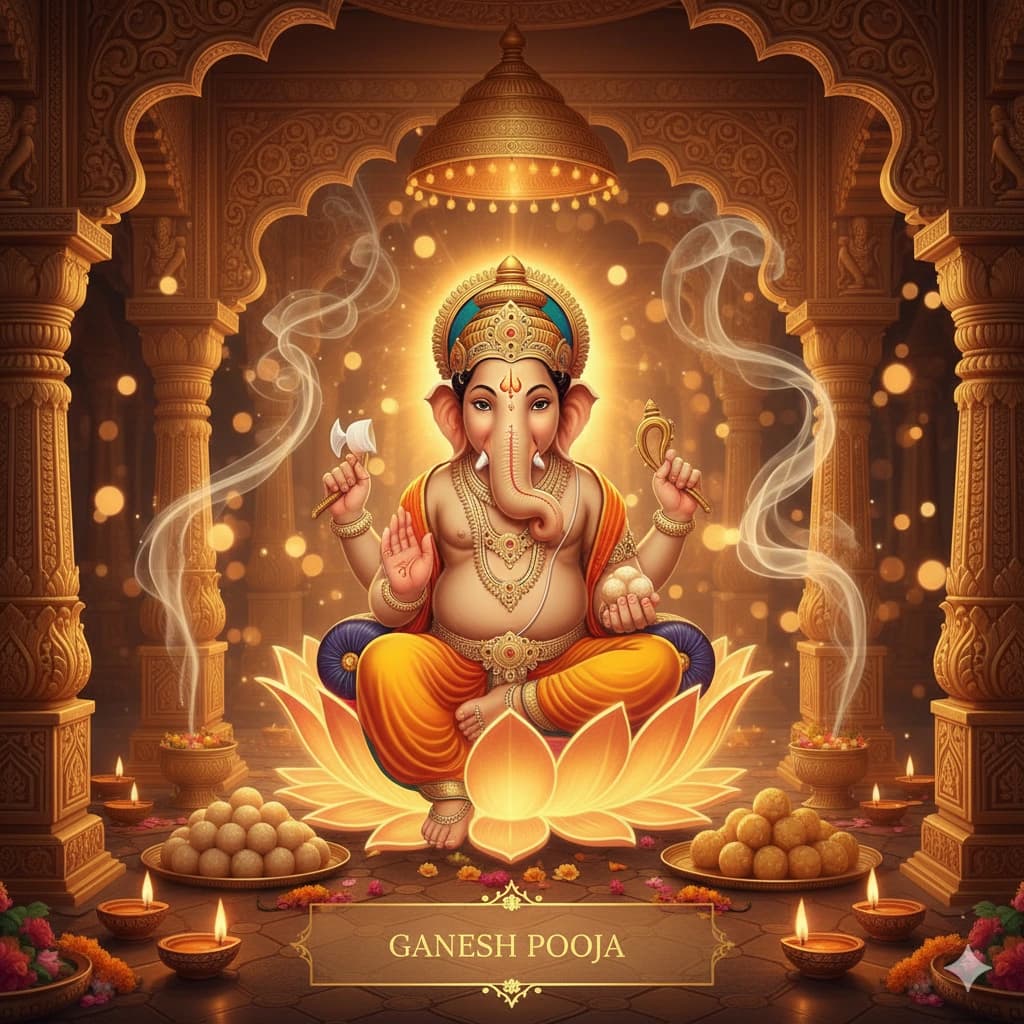
Why is Lord Ganesha Worshipped First? The Story Behind the Tradition
Whether it is a grand Griha Pravesh in a new Hinjewadi apartment, a lavish wedding in Camp, or a simple daily prayer in a Baner household, every Hindu ritual begins with the invocation of Lord Ganesha. We instinctively chant 'Om Shri Ganeshaya Namah' before starting anything new, from buying a new car to writing an exam. But have you ever wondered why the elephant-headed god holds the supreme position of being the 'Pratham Pujya' (the first to be worshipped)?
The Fascinating Mythological Story
The origin of this tradition lies in a famous story from the Shiva Purana. According to the legend, Goddess Parvati created a young boy from the sandalwood paste (ubtan) she used for bathing and breathed life into him. She called him her son, Ganesha, and instructed him to guard the door while she bathed.
When Lord Shiva returned, Ganesha, who did not know his father, strictly followed his mother's orders and stopped Shiva from entering. An argument ensued, and in a fit of rage, Shiva beheaded the boy with his trident (Trishul).
When Goddess Parvati discovered this, she was devastated and furious, threatening to destroy the entire universe in her grief. Realizing his mistake, Lord Shiva ordered his followers to bring the head of the first living creature they found sleeping with its head facing north. They returned with the head of a powerful elephant. Shiva placed the elephant head on the boy's body and brought him back to life.
The Boon of 'Pratham Pujya'
To pacify Goddess Parvati and to recognize Ganesha's extraordinary courage and unwavering devotion to his duty, Lord Shiva, Lord Brahma, Lord Vishnu, and all the celestial deities bestowed upon him a unique boon.

He was declared the leader of Shiva's celestial army, earning the title Ganapati (Lord of the Ganas). Furthermore, he was given the supreme blessing that he would be worshipped first before any other deity in every ritual, prayer, or auspicious undertaking, forever. If not, the ritual would be considered incomplete.
The Deep Spiritual Significance
Beyond the mythological story, worshipping Ganesha first holds profound philosophical and spiritual meaning:
- Vighnaharta (Remover of Obstacles): Ganesha's large elephant head represents supreme wisdom and intellect. Worshipping him first signifies invoking intelligence and foresight to identify and remove any potential obstacles (Vighnas) in our path before we begin a task.
- The Muladhara Chakra: In Kundalini Yoga, Lord Ganesha is the presiding deity of the Muladhara Chakra (the root chakra) located at the base of the spine. Since all spiritual awakening and flow of energy must begin from the root and move upwards, Ganesha must be invoked first.
- Symbolism of his Form: His large ears teach us to listen more; his small mouth reminds us to speak less. His small eyes represent sharp focus and concentration, essential qualities for beginning any new venture.
Frequently Asked Questions (FAQs)
What happens if we forget to worship Ganesha first?
According to scriptures, a Pooja or auspicious task performed without first invoking Lord Ganesha may face unforeseen hurdles and might not yield the complete, desired results. The energy of the ritual remains ungrounded.
Which mantra is best for starting a new task?
The simplest and most powerful mantra is "Vakratunda Mahakaya Suryakoti Samaprabha, Nirvighnam Kuru Me Deva Sarva Karyeshu Sarvada." It translates to a prayer asking the Lord with a curved trunk and immense body to remove all obstacles from our endeavors.
What Devotees in Pune Say
"Before opening our new startup office in Baner, we made sure to organize a proper Ganesh Homa. The Pandit we booked online explained the significance of the Pratham Pujya so beautifully. We truly felt a positive, obstacle-free shift in our business journey." - Kunal R., Baner
Start your new beginnings with the supreme blessings of the Vighnaharta. Book an expert Pandit in Pune for an authentic Ganesh Pooja at your home or office.