The Three Stories and Their Significance
The Durga Saptashati is structured around three interconnected stories, each representing a specific dimension of the Divine Mother's power:
First Story (Chapters 1): Madhu-Kaitabha Vadha
The demon brothers Madhu and Kaitabha, born from the earwax of Lord Vishnu, represent Rajas (passion/aggression) and Tamas (inertia/darkness). They threaten to overwhelm cosmic order. Goddess Mahamaya puts them under her spell and Lord Vishnu slays them. This story invokes the Devi's power to overcome deep-rooted inertia and unbridled desire.
Second Story (Chapters 2 4): Mahishasura Mardini
The most celebrated section, the battle with Mahishasura, the buffalo demon who represents ego, arrogance, and animal consciousness. The gods combine all their powers to create Goddess Durga. After nine days of battle, she slays Mahishasura. This story is the core of Navratri and invokes the power to overcome ego-driven suffering.
Third Story (Chapters 5 13): Shumbha-Nishumbha Vadha
The most complex section. Shumbha and Nishumbha (pride and self-deprecation, two faces of the same ego) and their army of demons are vanquished by the Divine Mother through Goddess Kali, Goddess Chamunda, and ultimately by Goddess herself. This invokes the deepest transformative power of the Devi.
Powerful Sections Within the Saptashati
- Devi Kavach (Armor): Read before the path for protection, one of the most powerful protective texts in Hinduism
- Argala Stotra: The bolt, a hymn that 'bolts' the Devi's energy into manifestation
- Kilak Stotra: The pin, removes the 'pin' blocking the path's full power
- Navarna Mantra ("Om Aim Hreem Kleem Chamundaye Vichche"): The central mantra, chanted as a framing practice for the entire path
Who Should Commission Durga Saptashati Path?
- People facing legal battles, enemy conflicts, or workplace challenges, the Devi specifically destroys adversarial forces
- Anyone going through severe financial losses or business failures
- Families with chronic health problems that resist conventional treatment
- Those affected by negative energies, black magic, or evil eye (Nazar)
- Women seeking empowerment, confidence, and protection, the Devi is the supreme protector of women
- Anyone performing Navratri celebrations at home
- Those seeking liberation from fear in any form
Step-by-Step Durga Saptashati Path Ritual Process
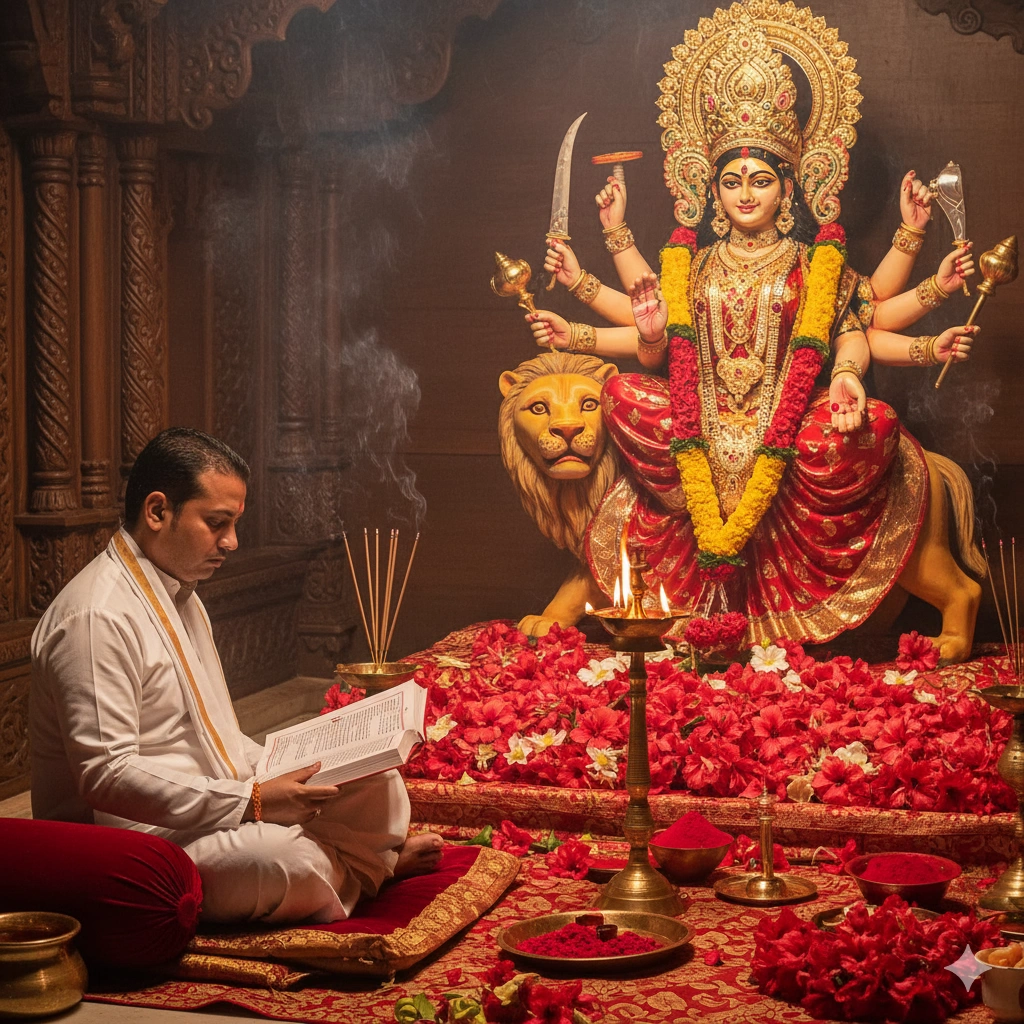
Sankalp: The Pandit takes the Sankalp in the host family's name, declaring the purpose of the recitation.
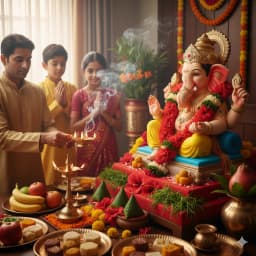
Ganesh Puja: Lord Ganesha is invoked.
Navarn Mantra Jaap: 108 repetitions of the Navarna Mantra establish the Devi's energy in the space.
Devi Kavach, Argala, and Kilak Recitation: These three protective preambles are recited before the main Saptashati.
Complete 13-Chapter Recitation: All 700 verses are recited in order, with specific Nyasa (ritual hand gestures) at the beginning of each chapter.
Havan: After the recitation, a Havan is performed with offerings of specific herbs for each chapter's deity, guggul, sesame, and red sandalwood for the most powerful effect.
Aarti: A grand Devi Aarti, including the 'Jai Ambe Gauri' Aarti, is performed.
Prasad Distribution: Sweet Prasad (kheer, puri, halwa) is distributed.
Benefits of Durga Saptashati Path
- Invokes the supreme protective power of Goddess Durga against all adversities
- Removes obstacles from career, business, legal matters, and relationships
- Destroys negative energies, black magic, and malefic planetary influences
- Brings financial recovery and stability
- Empowers the individual with courage, clarity, and divine strength
- Purifies the home's energy field completely
Best Time for Durga Saptashati Path
- Navratri (both Chaitra and Sharad), the most powerful period
- Fridays, the Devi's day of the week
- Ashtami and Navami tithis, the 8th and 9th lunar days, dedicated to the Devi
- Any month's Krishnapaksha Ashtami (especially Masik Durgashtami)
Why Choose Vedic Pooja for Durga Saptashati Path in Pune?
The Saptashati is technically demanding, its pronunciation, the Nyasa procedures, and the preamble texts require specific training. Our Pandits have mastered this text and perform it with the devotion and precision that Goddess Durga's primary scripture deserves.
We serve all areas of Pune, including Viman Nagar, Hadapsar, Aundh, Baner, and Hinjewadi. Call or WhatsApp 8668552465.