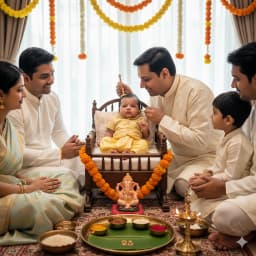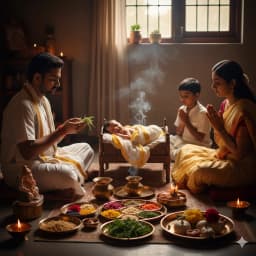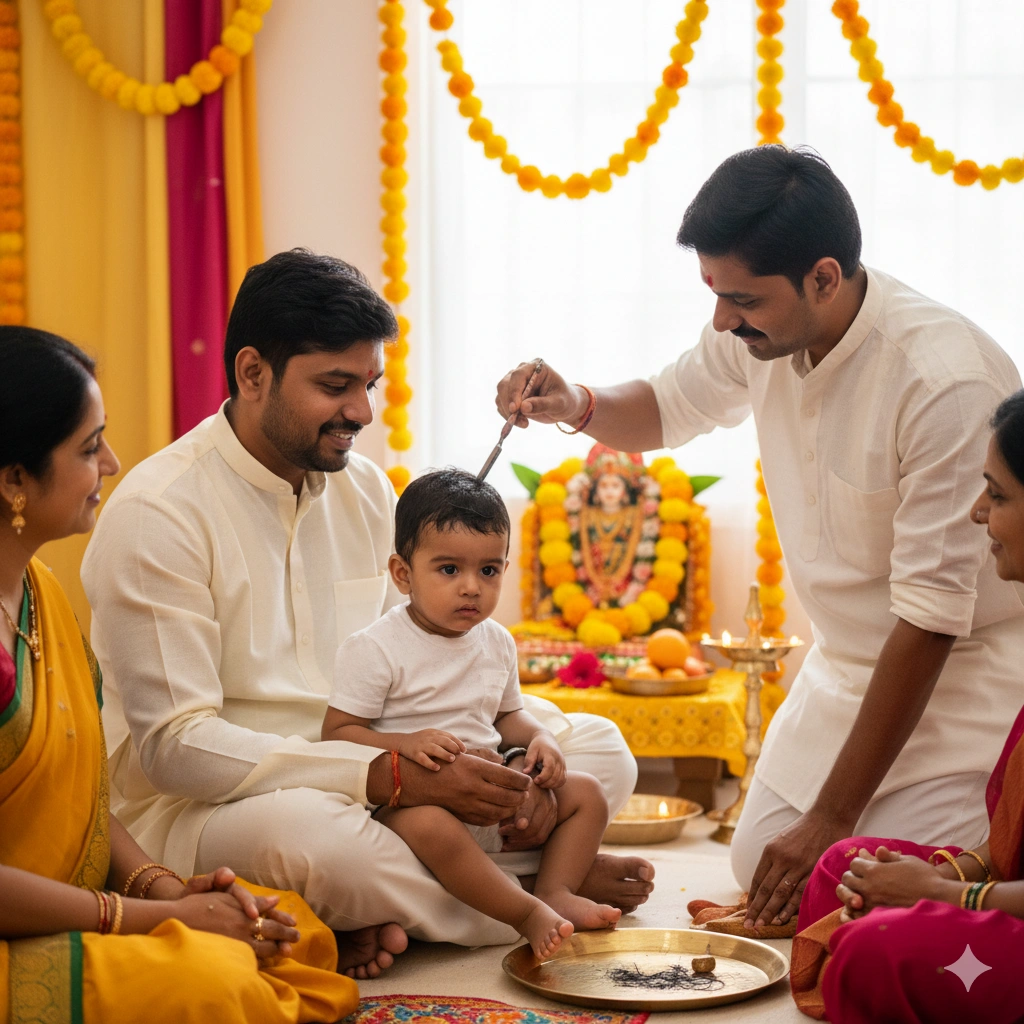
The Spiritual Significance of Mundan Sanskar
The Grihya Sutras, the ancient texts governing household ceremonies, prescribe Mundan as one of the most important Samskaras. The ceremony is also called Chudakarma (Chuda = tuft of hair, Karma = action) and Vapana Karma.
From a spiritual standpoint, the hair carried from birth is believed to accumulate negative energies and past-life impressions. By removing it with proper Vedic mantras under an auspicious Muhurat, the child's life is 'reset' on a higher frequency. The sacred energy of the mantras, combined with the physical act of shaving, creates a powerful spiritual transformation.
From a physiological standpoint, many traditional families and even modern pediatricians acknowledge that the scalp stimulation during Mundan promotes better blood circulation in the scalp, leading to healthier and thicker hair growth. The newborn hair, often thin and uneven, is replaced by stronger, more uniform growth.
Best Age and Time for Mundan Sanskar
According to the scriptures, Mundan should ideally be performed in the child's first or third year of life. Some traditions prefer the fifth or seventh year. The key factors are:
- Odd number of years: 1st, 3rd, or 5th year
- Auspicious Tithi: Dwitiya, Tritiya, Panchami, Saptami, Dashami, Dwadashi, or Trayodashi
- Auspicious Nakshatra: Ashwini, Mrigashira, Punarvasu, Pushya, Hasta, Chitra, Swati, Jyeshtha, Shravana, Dhanishtha, or Revati
- Auspicious Day: Monday, Wednesday, Thursday, or Friday
- Shukla Paksha preferred (waxing moon phase)
Our Pandits will calculate the most auspicious Muhurat for your child's Mundan based on the exact birth details.
Step-by-Step Mundan Sanskar Ritual Process
Sankalp: The Pandit takes a formal Sankalp in the child's name, birth star (Nakshatra), and gotra. The parents also take the Sankalp, declaring their intention to perform this sacred Samskara.
Ganapati Puja: Lord Ganesha is invoked and worshipped to remove all obstacles from the ceremony.
Matrika Puja: Seven divine mothers (Saptamatrikas) are invoked and worshipped for the protection of the child.
Navagraha Puja: The nine planetary deities are appeased to ensure their favorable influence on the child's life.
Mandal Rachana: An auspicious diagram is drawn and the child is seated in the father's lap or in a special chair in the center.
Kesh Sparsha Mantra: The Pandit chants specific mantras while gently touching the child's hair with blades of Darbha grass (sacred grass), a symbolic pre-shaving.
Pratham Kshaur (First Shave): The barber (Naapit) performs the actual shaving, beginning from the right side. The child's parents apply a paste of turmeric, ghee, and curd to the shaved areas.
Shikha Kharana: If the family tradition includes keeping a Shikha (a tuft of hair at the top), a small portion is left unshaved at this time.
Balarka Puja: The cut hair is offered to water (a river, lake, or bucket of clean water) or wrapped in fresh Darbha grass and offered at a sacred site. This represents the formal release of past-life impressions.
Aarti and Blessings: The child is dressed in new clothes, adorned with turmeric, and blessed by the Pandit with mantras for long life, intelligence, and health.
Benefits of Mundan Sanskar
For the Child:
- Releases past-life karmic impressions and negative energy accumulated in birth-hair
- Promotes healthier, stronger hair growth
- Stimulates the central nervous system through scalp ritual
- Establishes a spiritual identity and connection with the family's lineage
- Brings blessings of good health, intelligence, and longevity
For the Family:
- Strengthens family bonds through a shared sacred ceremony
- Fulfills the Vedic obligation of performing the child's Samskaras
- Attracts divine blessings for the entire household
Astrological Benefits:
- Neutralizes malefic planetary influences present at birth
- Activates positive planetary periods (Dashas and Antardashas) in the child's chart
What's Included in Our Mundan Sanskar Service
- Experienced Pandit trained in Samskara rituals
- Complete Mundan Samagri: Darbha grass, turmeric paste, ghee, curd, flowers, Gangajal, new cloth for the child, Puja Thali
- Mantra recitation throughout the ceremony
- Arrangement for a skilled barber (Naapit) if required
- Post-ceremony blessing and Prasad
Why Choose Vedic Pooja for Mundan Sanskar in Pune?
A child's first Samskara sets the spiritual tone for their entire life. We understand the sacredness of this moment and bring both procedural correctness and heartfelt care to every Mundan we perform.
Our Pandits are trained in Grihya Sutra procedures and carry complete, fresh samagri to your home in Pune, whether in Wakad, Baner, Kharadi, or any other locality. We also coordinate with a skilled barber to make the shaving process gentle and safe for young children.
Call or WhatsApp 8668552465 to book your child's Mundan Sanskar in Pune today.