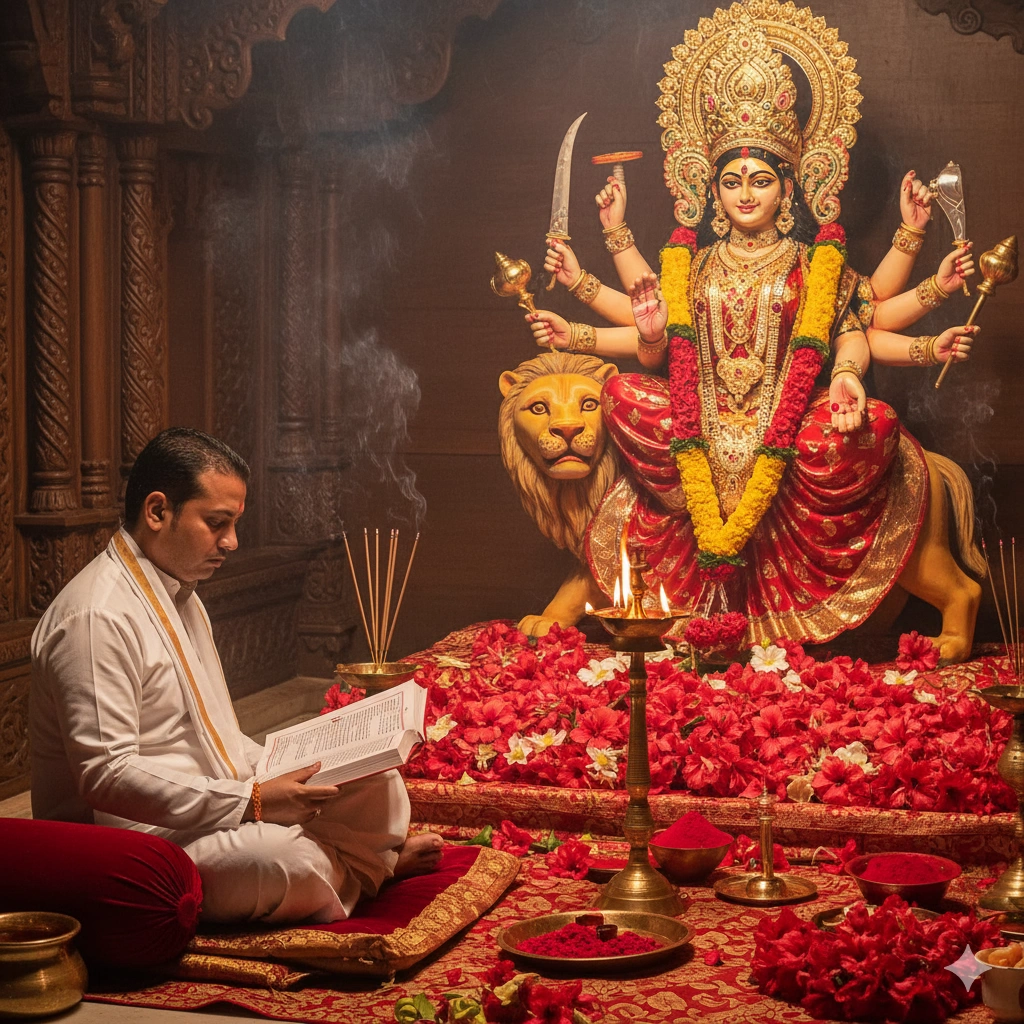
The Spiritual Significance of Navratri
Navratri is not merely a festival, it is a nine-day intensive spiritual practice (Sadhana). The Devi Bhagavat Purana and Markandeya Purana describe in detail how the Divine Mother in her form as Durga defeated the demonic forces of Mahishasura, Shumbha, Nishumbha, and Raktabija over nine nights, not just as a mythological event, but as a cosmic recurrence that happens within every devotee's consciousness.
Each of the nine nights is dedicated to one of the Navadurga, the nine forms of the Divine Mother:
- Shailaputri, Daughter of the mountains, base energy, root chakra
- Brahmacharini, The ascetic, tapas, self-discipline
- Chandraghanta, Courage, beauty, grace
- Kushmanda, The cosmic creator, solar energy
- Skandamata, Mother of Kartikeya, nurturing energy
- Katyayani, The warrior form, destruction of ego
- Kalaratri, The fierce destroyer of darkness
- Mahagauri, Peace, purity, wisdom
- Siddhidatri, Bestower of spiritual powers
Worshipping each form in sequence creates a progressive spiritual awakening that mirrors the journey from base existence to liberation.
Key Navratri Rituals We Perform
Day 1, Kalash Sthapana (Ghatasthapana):
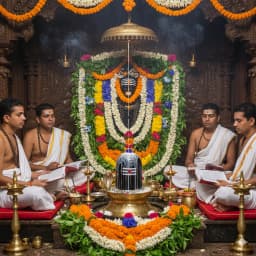
The ceremony begins with the installation of the sacred Kalash, a pot filled with water, herbs, and a coconut, representing the Divine Mother. The Pandit chants specific mantras while establishing the Kalash in the northeast corner of the puja space. Barley seeds (Jau) are sown in fertile soil at this time, their sprouting over nine days symbolizes growth and abundance.
Days 1 9, Daily Durga Aarti and Puja:
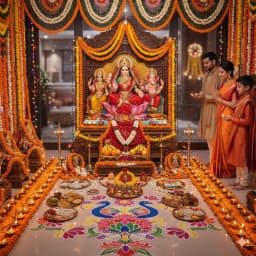
Each evening, a beautiful and detailed Aarti is performed with multiple lamps and offerings of flowers, fruits, and sweets. The specific form of the Divine Mother for that day is worshipped with her corresponding color, flower, and offering.
Durga Saptashati Path:
The recitation of the 700 verses of the Devi Mahatmyam (Durga Saptashati), the primary scripture of Navratri, forms the devotional backbone of the entire nine-day period. Our Pandits recite this in its authentic Sanskrit form.
Ashtami/Navami, Kanya Puja (Kumari Puja):
One of the most beloved Navratri traditions, nine young girls (representing the nine forms of Durga) are invited, worshipped with flower garlands, and offered food. This act of worshipping the living Goddess in young girls is considered one of the most merit-generating acts of Navratri.
Navami, Havan:
On the ninth day, a grand fire ceremony (Havan) is performed. 108 to 1,008 Ahutis are offered into the sacred fire with the Durga Saptashati mantras and the Navarna Mantra. This Havan purifies the home, destroys accumulated negative energies, and seals the nine days' worth of divine grace.
Dashami, Visarjan:
The Kalash is formally bid farewell on Vijaya Dashami (Dussehra). In some traditions, Sindoor Khela (exchange of sindoor among women) is performed as a joyful community celebration.
Benefits of Navratri Puja
Spiritual Benefits:
- Direct invocation of the Divine Mother's energy at its annual peak
- Accelerated spiritual growth through nine days of continuous worship
- Destruction of inner negativity (ego, fear, anger), mirroring the Devi's victory over demons
- Activation of all nine chakras through the nine nights' progressive worship
Material Benefits:
- Attracts wealth and prosperity, Goddess Lakshmi is invoked on the final days
- Protects against enemies, legal troubles, and competitive challenges
- Brings harmony and peace to family relationships
- Supports career growth and recognition (especially through Saraswati's blessings)
Health Benefits:
- The vibrations of the Durga Saptashati are specifically known to support healing
- Fasting during Navratri purifies the body and sharpens the mind
- The Havan's sacred smoke purifies the atmosphere, reducing illness-causing bacteria
Best Muhurat for Navratri Puja
Navratri occurs on specific dates each year according to the Hindu Panchang:
- Chaitra Navratri: Starts on Pratipada of Chaitra Shukla Paksha (March April)
- Sharad Navratri: Starts on Pratipada of Ashwin Shukla Paksha (September October)
The Ghatasthapana (Kalash installation) must be performed during the most auspicious Muhurat on Day 1, our Pandits calculate this precisely for your location in Pune.
What's Included
- 1 3 experienced Pandits (based on package)
- Complete Navratri Samagri for all 9 days
- Kalash Sthapana setup including fertile soil and barley seeds
- Durga Saptashati recitation (1 to 3 complete readings based on package)
- Daily Aarti materials, flowers, and fruits
- Kanya Puja on Ashtami/Navami
- Havan on Navami with 108 to 1,008 Ahutis
- Prasad distribution
Why Choose Vedic Pooja for Navratri in Pune?
Navratri is Pune's most celebrated festival alongside Ganesh Chaturthi. Our Pandits have performed community and home Navratri celebrations across hundreds of societies in Kharadi, Viman Nagar, Hadapsar, Pimpri-Chinchwad, Pashan, and beyond. We understand how to manage the logistics of a nine-day puja, coordinate with families for daily schedules, and ensure that the devotional quality is maintained through all nine nights.
For community Navratri celebrations in housing societies, we offer complete event management, including setup, sound system coordination, and catering guidance.
Call or WhatsApp 8668552465 to book your Navratri Puja in Pune.