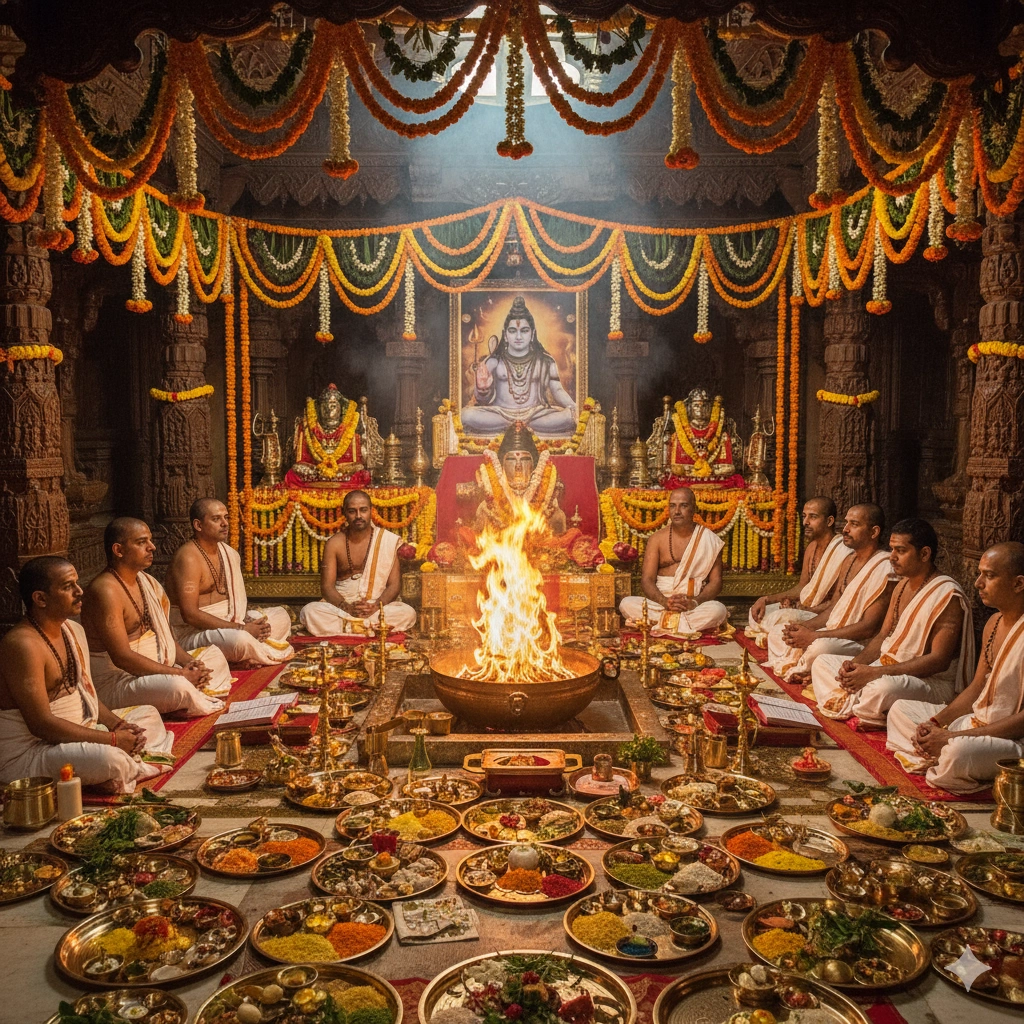
The Vedic Basis of Rudra Yagna
The tradition of Rudra Yagna is rooted in the Vedic concept of collective Vedic fire offerings (Yajna) as a means of connecting with and propitiating cosmic powers. The Sri Rudram, divided into Namakam (the first 8 anuvaks calling out to Rudra) and Chamakam (the final 11 anuvaks requesting boons), is the oldest and most comprehensive hymn to Lord Shiva, dating to the Krishna Yajurveda.
The specific numerical multiples of Rudram recitations in a Rudra Yagna have precise meanings:
- 11 Rudrams: A single Laghu Rudrabhishek cycle. Performed by 1 2 Pandits.
- 121 Rudrams: An Ekadasha Rudri, 11 Pandits each chanting 11 Rudrams simultaneously. Creates a 11x amplification of energy.
- 1,331 Rudrams: A Maha Rudra, 11 Pandits each performing 121 Rudrams. One of the most powerful ceremonies in Vedic tradition.
Our basic package covers 121 Rudrams (5 Pandits, completing over the course of one day). Our premium package covers a full Maha Rudra configuration.
Who Should Organize a Rudra Yagna?
- Families facing repeated serious illness, especially health crises that seem to repeat across generations (indicating family karma)
- Communities experiencing collective distress, natural disasters, recurring accidents, epidemics
- Business organizations seeking a powerful reset after sustained losses or disruptions
- Housing societies wishing to consecrate the collective energy of the residential community
- Individuals in severe Saturn, Rahu, or Ketu periods who need a high-powered spiritual intervention
- Those performing a Shata Chandi or Navagraha Maha Yagna for whom Rudra Yagna is the crown ceremony
- Devotees of Lord Shiva seeking the highest available form of devotional offering
Step-by-Step Rudra Yagna Process
Yagna Shala Setup: A dedicated fire altar (Kunda) is constructed, typically a square pit lined with bricks, with specific geometric proportions corresponding to the type of Yagna.
Sankalp by Host: The hosting family or organization takes the formal Sankalp, declaring the purpose and dedicating the merit to the welfare of all.
Ganesh Puja, Navagrah Puja: All planetary deities are invoked. Special attention to Saturn and Rahu.
Shivalinga Abhishek: The Shivalinga is bathed with Panchamrit, Gangajal, and Bilva leaves as a preliminary act of devotion.
Yagna Diksha: All participating Pandits take a formal dedication to Lord Shiva for the duration of the Yagna.
Sri Rudram Recitation with Yagna: The participating Pandits begin the continuous Rudram recitation. With each verse of the Namakam, corresponding Ahutis (offerings) of ghee, sesame, rice, and specific herbs are poured into the sacred fire by the Yagna team.
Chamakam Offerings: Each recitation of the Chamakam is accompanied by special offerings for the 33 specific boons requested, from cows to gold to spiritual liberation.
Musical Component: The premium package includes a traditional Vedic musical team, Veena or Sarangi and Mridangam, whose music elevates the atmosphere to a concert of devotion.
Purnahuti: The grand final offering, the Purnahuti, marks the conclusion of the Yagna. This is a large offering of coconut, cloth, flowers, and all remaining samagri into the fire, representing the total surrender of all offerings to Lord Shiva.
Maha Prasad: A community meal is served. For large Yagnas, hundreds of participants join in the Prasad distribution.
Benefits of Rudra Yagna
- Creates a massive upward surge of Shiva energy that purifies the environment for miles around the Yagna site
- Neutralizes collective karma, particularly powerful for families, organizations, or communities
- Grants extraordinary blessings for health, prosperity, and spiritual advancement
- Counters the most intense planetary afflictions including Saturn, Rahu-Ketu, and 8th house transits
- The Yagna's merit is infinite, it benefits not just the host but all participants, neighbors, and even the broader community
- A Rudra Yagna performed at home consecrates the space for decades
Best Time for Rudra Yagna
- Maha Shivaratri, the most powerful occasion
- Shravan Maas (the entire month of Shravan), Lord Shiva's special month
- Pradosh Vrata (13th Tithi), Shiva's most auspicious time
- Monday mornings, for ongoing smaller Rudra Yagnas
Why Choose Vedic Pooja for Rudra Yagna in Pune?
A Rudra Yagna requires coordination between multiple Pandits with expert Rudram knowledge, a properly constructed Yagna Shala, and precise ritual management. We have organized Rudra Yagnas in homes, temples, and community halls across Pune, from intimate family Yagnas in Kothrud and Hadapsar to large community events in Hinjewadi and Pimpri-Chinchwad.
Our senior Pandit personally supervises all Rudra Yagnas to ensure procedural integrity.
Call or WhatsApp 8668552465 for a consultation and custom quote for your Rudra Yagna in Pune.